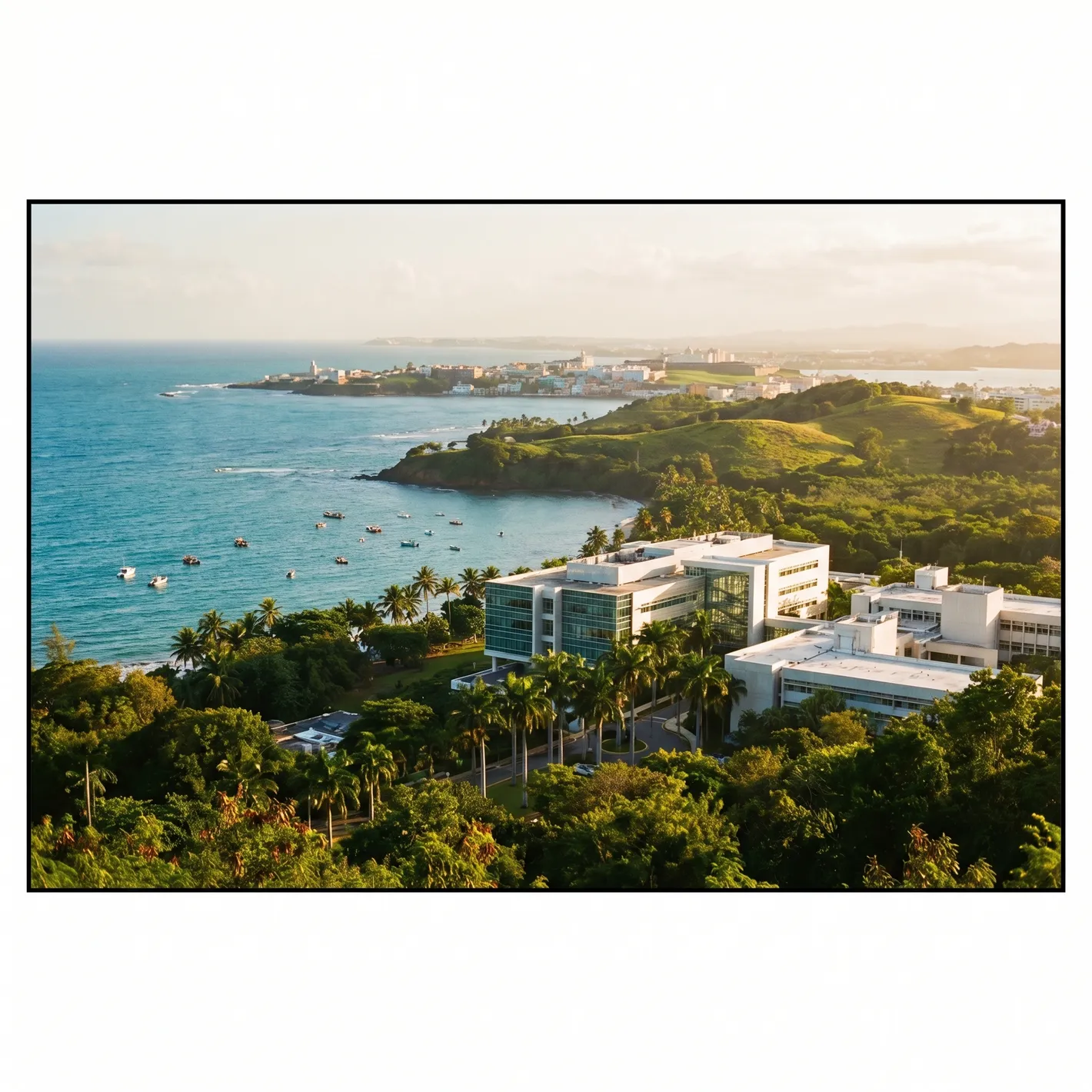
A Destination Unlike Any Other
Medical tourism, traveling somewhere else specifically for healthcare, is a multi-billion-dollar global industry. Patients go for elective procedures, specialized treatments, dental care, and wellness services. They want lower cost, expertise they cannot get at home, or a place they would rather recover. Puerto Rico is hard to copy in that market. It is a US territory with US-standard hospitals and accreditation, it is primarily Spanish-speaking, and most major US and Latin American cities are within a three-hour flight.
Patients from Latin America can get American healthcare standards without the language barrier or the culture shock of a large mainland city. Mainland US residents get a warm destination where their insurance may apply and English is widely understood. An international destination cannot offer that combination.
Healthcare Quality at US Standards
Puerto Rico’s hospitals and clinics follow the same federal regulations, accreditation bodies, and quality standards as mainland facilities. The Joint Commission accredits Puerto Rican hospitals with the same criteria it uses in New York or California. Medical school graduates practice under US licensing standards. The FDA regulates pharmaceuticals. Patients who worry about care quality abroad have a concrete reason to treat Puerto Rico differently.
Many of the island’s tertiary hospitals have also built specialized programs in cardiology, oncology, orthopedics, and other high-demand services. Those programs are a clinical draw in their own right, rather than a cheaper substitute for mainland care. Sanavia Health Partners works with these facilities so international patients can reach the services available, with coordination that keeps a complicated course of treatment organized.
The Sanavia Advantage for Medical Tourists
Even a familiar regulatory system is hard to use from another country. Sanavia runs a medical tourism coordination program that takes patients from the first inquiry through consultation, treatment, and follow-up. Bilingual care navigators handle travel, lodging, and clinical scheduling. Patients and families can spend their attention on health instead of logistics.
MyChron gives those patients one digital record for the whole stay. Consultation notes, imaging, pre-operative assessments, and post-procedure instructions sit in one secure place, and patients can share them with providers in Puerto Rico and at home. Care does not stop when the return flight boards, so the record has to travel too.
Economic Impact and Community Integration
Medical visitors spend beyond the clinic. They stay in hotels, eat in local restaurants, and often stay longer for Puerto Rico’s culture, history, and coast. Sanavia works with local hospitality providers on packages that match lodging to recovery: resort properties for some patients, quieter wellness retreats for others.
Sanavia also treats local residents as part of the same investment. Clinical infrastructure, workforce development, and care delivery built for medical tourists should raise quality and access for people who live on the island. Premium services for paying visitors, with local patients left out, is the outcome the program is built to avoid.
The Future of Puerto Rico as a Health Destination
Puerto Rico already has the ingredients to be a leading medical tourism destination in the Western Hemisphere. What is still thin is the organization around those advantages: coordination capacity, technology, provider networks, and quality measurement that turn potential into a reliable patient experience. That is the work Sanavia Health Partners is doing with its partners and its patients.